
Mivan
Construction
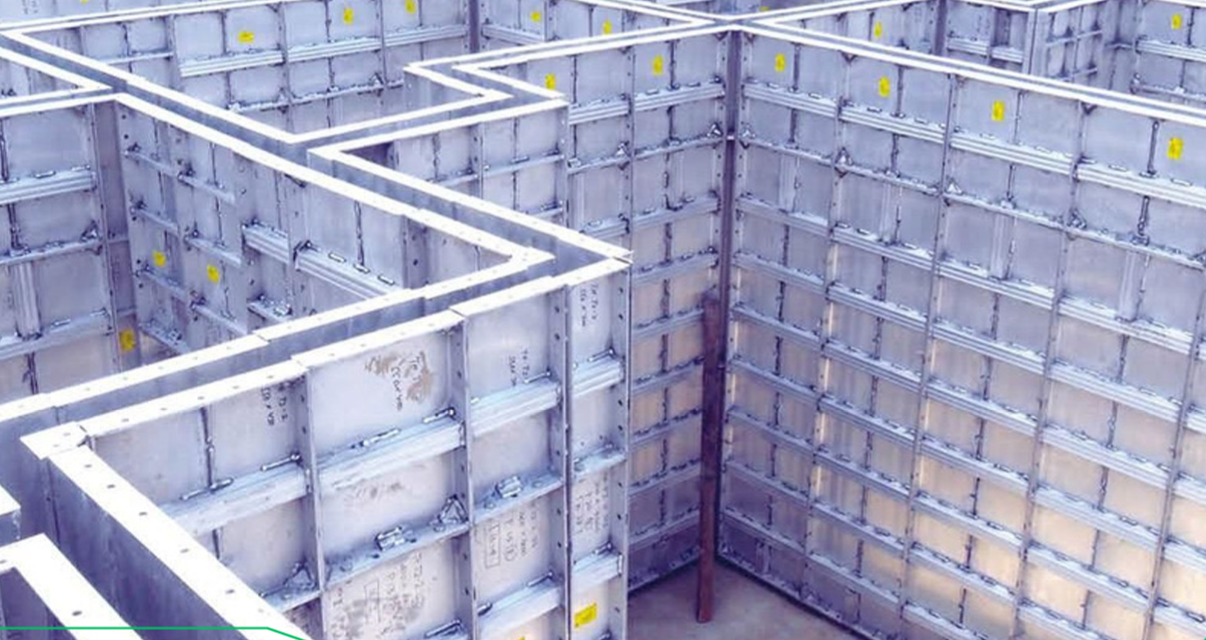
Mivan construction is a high-speed system where walls, slabs, beams, and columns are cast simultaneously using aluminum formwork. This creates a single, integrated Reinforced Cement Concrete (RCC) structural unit that offers superior seismic performance and strength compared to traditional masonry.
Advantages
- Very fast construction cycle
- Monolithic RCC structure (walls + slabs together)
- High structural strength and seismic resistance
- Uniform dimensions and repeatability
- Smooth de-shuttered concrete finish
- Reduced brickwork and plaster dependency
- Suitable for large, mass-housing projects
Challenges
- High initial cost of aluminium formwork
- Limited design flexibility and difficult alterations
- Cracking at construction / cold joints
- Cracking and seepage at tie-rod holes
- Pinhole formation on RCC surfaces
- Honeycombing due to vibration or reinforcement congestion
- Difficult to permanently seal pinholes and honeycombed areas
- Structural RCC cracks not repairable with normal putty or mortar
- Window openings not perfectly straight (cast openings)
- Gaps between RCC wall and window frames
- High seepage risk at window periphery
- Difficulty in integrating sunshades (chajjas)
- Cracking and leakage at sunshade–wall junctions
- High heat transmission due to dense RCC and steel reinforcement
- Thermal movement, UV exposure on external RCC
Solution: System-Based Elastomeric Treatment
- Impregnation technology for deep pore penetration
- Elastomeric in nature to accommodate movement
- Strong film formation for surface continuity
- Hydrophobic properties to block water ingress
- Very good adhesion to RCC substrates
- Compatible coefficient of thermal expansion and contraction
- UV resistant for long-term exterior durability
Conclusion
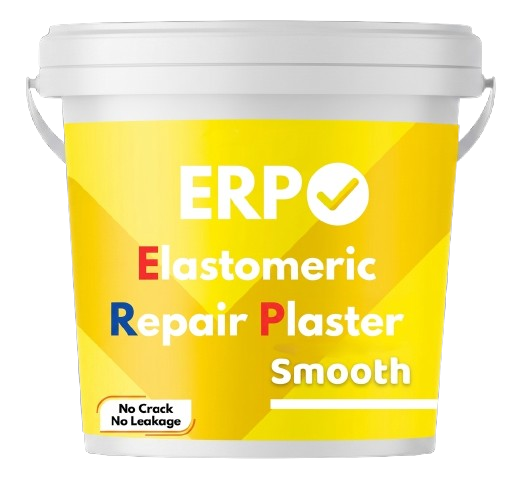
- All the above critical properties are available in ERP Elastomeric Repair Plaster
Suitable for:
- Construction joints
- Tie-rod holes
- Pinholes and honeycombing
- Window junctions and sunshade interface
Application Procedure (Aligned to Challenges)
Window Straightening (Before Fixing Windows)
1. Apply ERP on window jambs
2. Level with aluminium tube (panning method)
3. Allow to dry completely
4. Repeat 2–3 times if required
5. Treat all four sides, then fix the window
Gap Sealing (After Window Fixing)
1. Fill ERP continuously into window–wall gaps
2. Finish flush with blade or trowel
3. Surface becomes watertight
External Facade – Construction Joints
1. Apply ERP @ 2–3 mm thickness
2. Minimum 6-inch width
3. Embed 45 GSM nylon mesh (6 inch) while wet
4. Remove excess material
5. Allow to dry, then apply one more coat
Full Body Surface Treatment
1. Apply ERP with trowel
2. Roll in all eight directions to fill voids
3. Remove excess material
Leveling / Undulation Correction
1. Apply ERP thick where required
2. Level using aluminium tube
3. Apply two coats, gap of 6–8 hours
Paint Readiness
1. After final coat, surface is ready for painting in 6–8 hours
FAQs – Mivan Construction
What is monolithic (Mivan) construction?
It is a construction system where walls, slabs, beams, and columns are cast together in RCC using aluminium formwork, forming a single integrated structural unit.
Is monolithic construction structurally stronger than masonry?
Yes. The continuous RCC system provides higher strength, stiffness, and better seismic performance than conventional brick masonry structures.
Why do cracks appear in monolithic buildings?
Cracks mainly occur due to concrete shrinkage, thermal movement, construction joints, and stress concentration around openings and tie-rod holes.
Why do cracks appear in monolithic buildings?
Construction joints are interfaces between two concrete pours, typically between floors or casting stages, and are natural weak points if not treated properly.
Do construction joints tend to crack and leak?
Construction joints are interfaces between two concrete pours, typically between floors or casting stages, and are natural weak points if not treated properly.
What are tie-rod holes and why are they critical?
Tie-rod holes are left after removing formwork rods. They are prone to cracking and seepage if not sealed using flexible, compatible materials.
Why are pinholes and honeycombing common in Mivan walls?
Tie-rod holes are left after removing formwork rods. They are prone to cracking and seepage if not sealed using flexible, compatible materials.
Can pinholes and honeycombing be permanently sealed?
Tie-rod holes are left after removing formwork rods. They are prone to cracking and seepage if not sealed using flexible, compatible materials.
Why do window openings cause leakage in monolithic buildings?
Window openings are cast in concrete and rarely perfectly straight, creating gaps between RCC and frames, leading to seepage if not properly aligned and sealed.
Why is sunshade (chajja) leakage common in Mivan buildings?
Sunshades create junctions with the main RCC wall. Differential movement and poor detailing often lead to cracks and leakage at these interfaces.
Is heat transmission higher in monolithic RCC buildings?
Yes. Dense concrete and continuous steel reinforcement transmit heat efficiently, increasing indoor temperatures without proper surface treatment.
Can normal putty or plaster be used on monolithic RCC?
No. Rigid putties and plasters crack due to movement mismatch and do not perform well on structural RCC surfaces.
What type of repair material is suitable for monolithic construction?
Materials must be elastomeric, impregnation-based, crack-bridging, hydrophobic, UV resistant, and compatible with concrete movement.
Is full-surface treatment better than patch repair in monolithic buildings?
Yes. Spot repairs fail over time. Full-body treatment ensures continuity, crack control, and long-term watertight performance.
Is workmanship critical in monolithic construction?
Extremely critical. Poor detailing at joints, openings, and repairs leads to long-term cracking, seepage, and maintenance issues.