
Built for Every Construction Type
Modern construction uses diverse methods and materials — and each creates its own surface engineering challenges. FTR Solutions has developed targeted system solutions for India's four dominant modern construction types.
Precast Construction Surface Solutions
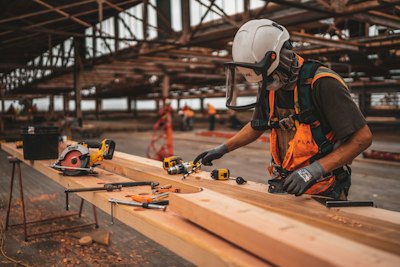
Precast concrete construction is growing rapidly across India's residential, commercial, and infrastructure sectors — driven by faster construction cycles, better dimensional control, and reduced on-site labour. FTR delivers end-to-end surface treatment for every stage of the precast lifecycle.
Precast panels are manufactured under controlled conditions, but the challenges begin on site. Handling, transport, lifting, and installation introduce stresses that cause hairline cracks in panels. Once erected, the joints between panels become the primary vulnerability — for both structural integrity and water exclusion. Standard materials cannot accommodate this movement.
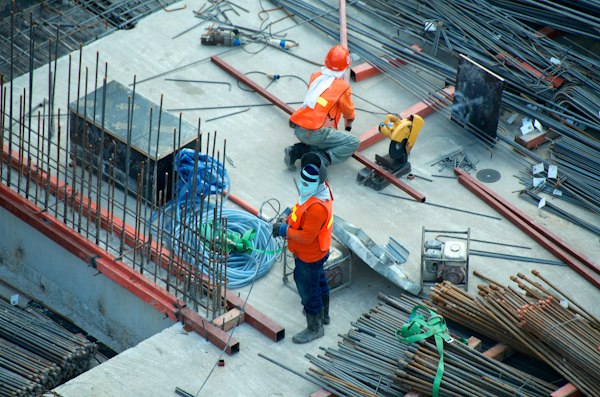
Differential movement between panels creates cracks at joints that standard mortars cannot seal. Movement is continuous — so the seal must flex with it.
Minor dimensional variations between panels create surface irregularities requiring filling before any finishing coat can be applied cleanly.
Cast-in anchor points and tie-rod holes are potential water ingress paths. Each must be treated individually before waterproofing can be effective.
Pinholes, honeycombing, and blowouts require repair before surface coating — each left untreated becomes a future maintenance failure.
Generic plasters don't achieve the bond strength needed on smooth precast surfaces — leading to delamination and costly rework.
The FTR Precast Surface System

What the System Delivers

AAC Block Construction System
Autoclaved Aerated Concrete blocks have become the preferred masonry unit for modern multi-storey construction in India — lighter, better insulating, and faster to lay than traditional brick. India's leading developers now specify AAC blocks as standard. FTR's system is designed specifically for AAC's unique surface chemistry.

AAC's cellular structure — the same quality that makes it lightweight and insulating — creates significant challenges at the surface level. Standard OPC-sand plasters don't bond to AAC. The block's differential movement relative to the RCC frame causes predictable cracking at interfaces. Without a purpose-built system, failures are inevitable.
AAC's porous surface absorbs water rapidly, causing mortar to dry prematurely and bond poorly — weakening the entire masonry assembly from the first course.
AAC blocks expand and contract at a different rate than the RCC frame — causing predictable cracking at block-column and block-beam interfaces.
Standard OPC-sand plasters don't achieve adequate bond to AAC's high-pH, high-silica surface — leading to delamination, hollow spots, and plaster falling in sheets.
Without a water-resistant plaster system, AAC walls absorb and transmit moisture, creating damp patches and salt efflorescence at the finish surface.
The FTR AAC Block System
What the System Delivers

Mivan Construction Repair Solutions
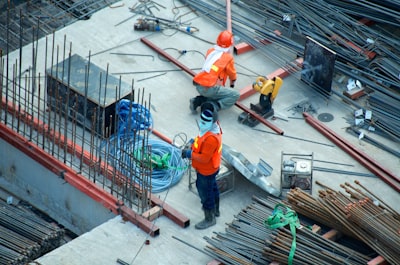
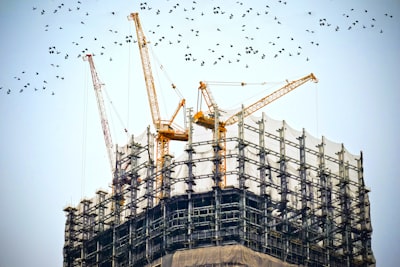
Mivan aluminium formwork technology produces monolithic reinforced concrete structures at remarkable speed — a complete residential floor can be cast and stripped within 24 hours. For high-volume housing, Mivan has become the dominant construction method. But the surface it produces is not without defects.
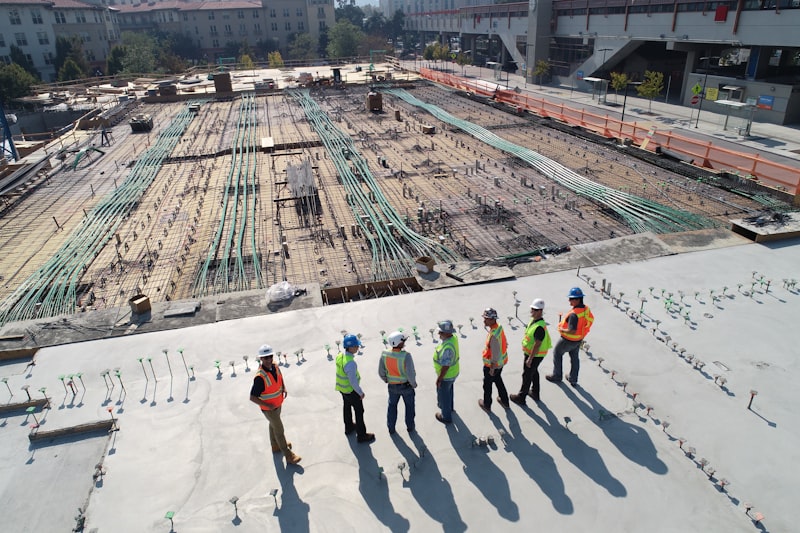
Concrete placement and compaction over large areas inevitably produces localised defects that must be remediated before finishing can proceed. Pinholes, honeycombing, tie-rod holes, and surface cracks are standard outcomes of the casting process — not exceptions. FTR's system addresses each defect type with a targeted product, within the fast-cycle programme that Mivan demands.

Small surface voids caused by trapped air during concrete placement. Individually minor, they compromise surface integrity and provide water ingress paths at scale — hundreds per floor.
Larger voids caused by inadequate compaction or aggregate segregation — leaving exposed aggregate and structural voids in the concrete surface that require filling.
Every form tie point leaves a void in the concrete surface after cone removal — typically hundreds of points per floor, each a potential corrosion and water ingress path.
Shrinkage cracks, settlement cracks, and construction joint cracks require sealing before waterproofing or finishing coats are applied.
Localised failures during casting that leave depressions requiring infill before any surface treatment can be applied uniformly.
The FTR Mivan Repair System
Built for Fast-Cycle Construction
Drywall Surface Solutions
Gypsum board and cement board drywall systems are standard in modern office fit-outs, commercial interiors, hotel construction, and increasingly in residential buildings. Drywall enables fast partitioning, clean service integration, and flexible space planning — advantages driving adoption across the sector. But the finishing challenges are distinctive.
For projects where the quality of the painted finish is a critical deliverable — hotels, high-end residential, corporate offices — the difference between a rigid joint compound and ERP's elastomeric system is visible. No telegraphed joints. No micro-cracks. No re-painting after six months. The surface you paint on determines the surface you ultimately see.
The interface between boards is the primary failure point — differential movement and thermal cycling cause joint compound to crack, telegraphing through the finish coat.
Minor variations in board alignment and surface flatness require skilled filling to achieve a high-quality painted finish — a standard that rigid joint compounds can't reliably deliver.
Standard joint compounds and skim coats are rigid — they crack when the board system flexes. Flexibility must be built into the finishing material, not assumed from the substrate.
In wet or humid areas, non-moisture-resistant joint compounds absorb water, swell, and fail — requiring replacement rather than repair.
The FTR Drywall Solution
The Visible Difference
Finish-quality-conscious architects and interior designers who understand that the surface you paint on determines the surface you ultimately see.
Talk to Our Technical Team
Surface engineering problems are best solved with a conversation. Tell us your substrate, your challenge, your construction method — and we'll recommend the right FTR system.