
The Technical Foundation Behind Every System
Reference material for architects, structural engineers, project managers, and application contractors — covering the engineering behind FTR's systems and how to specify them correctly for your project.
Understanding Precast Surface Engineering
Precast concrete panels are produced in a factory environment with controlled mix design, vibration compaction, and curing — giving them higher concrete quality than most in-situ pours. But they present unique surface engineering challenges that derive from their production method and their behaviour once installed.
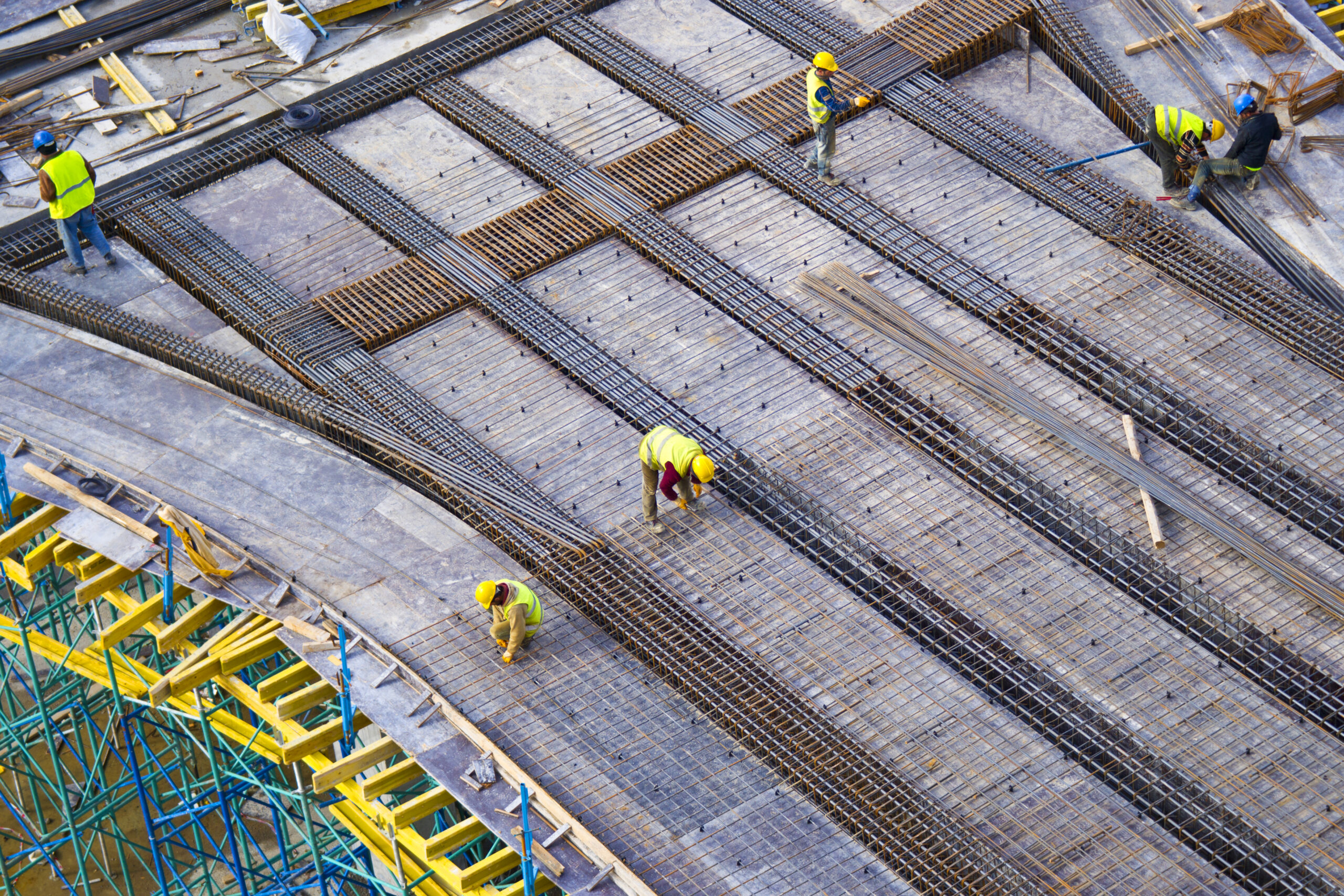
The central difficulty is that precast panels are individual structural elements assembled into a continuous surface. Each interface between panels is a potential vulnerability — for both structural integrity and water exclusion. These interfaces are the engineering focus of FTR's precast surface system.
Why Rigid Joint Fillers Always Fail
The joint between adjacent precast panels is the critical interface for both structural performance and water exclusion. Panels move relative to each other in response to thermal cycling, wind load, and differential settlement. A rigid joint filler will crack under this movement — typically within the first annual temperature cycle.
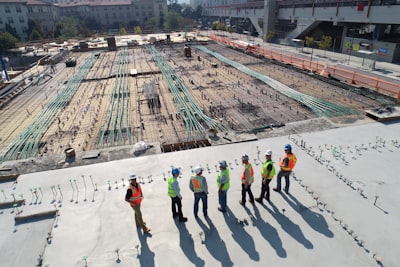

The correct technical response is an elastomeric joint treatment — one with sufficient elongation to accommodate the expected movement without exceeding its elastic limit. FTR's ERP system is formulated specifically for this application, with elongation properties calibrated to the movement range typical in Indian precast construction.
Adhesion on Smooth Precast Surfaces
Smooth, high-strength precast surfaces present an adhesion challenge for conventional plasters. The low porosity of properly cured precast concrete means there is minimal mechanical keying for the plaster to bond into. Surface preparation — mechanical abrading or chemical etching — improves adhesion but is inconsistently applied on site.
Relies on physical interlocking with the substrate's surface texture. On porous brick or rough concrete, this is adequate. On smooth, dense precast concrete, there is insufficient texture for mechanical keying — making adhesion dependent entirely on surface preparation quality.
ERP's polymer chemistry creates chemical bonds with the silica compounds in concrete — independent of surface texture. This adhesion mechanism is active regardless of surface preparation quality, providing a tolerance for real-world application conditions where preparation is inconsistent.
ERP's bonding chemistry achieves adequate adhesion on smooth precast surfaces without relying on mechanical surface preparation alone. This tolerance is critical for real-world application conditions — on large precast projects, surface preparation quality varies across the structure, and the adhesive system must accommodate this variation.
AAC Block Properties and Their Engineering Implications
Autoclaved Aerated Concrete is produced by mixing Portland cement, fly ash or sand, lime, water, and aluminium powder, then autoclave-curing under high pressure. The aluminium reacts to produce hydrogen gas bubbles — creating the characteristic cellular pore structure that gives AAC its desirable properties.
These same properties determine the engineering behaviour that every specifier needs to understand when designing surface systems for AAC construction.
Differential Movement at Frame Interfaces
The most common cause of cracking in AAC block walls is differential movement at the interface between the block infill and the RCC structural frame. The block and the frame have different thermal expansion characteristics and different structural behaviour under load — producing shear stresses at the interface that exceed the tensile strength of rigid plasters.

Movement joints at block-column and block-beam interfaces provide a controlled plane for differential movement to occur — preventing stress from accumulating in the plaster and block surface. These joints must be maintained through the full plaster system thickness.
Even with movement joints, residual stress distributes across the block surface. An elastomeric plaster system — ERP Fiber as base coat — accommodates this distributed stress without cracking. Fiber reinforcement further distributes tensile loads, preventing crack propagation from localised stress concentrations.
Standard OPC-sand plasters fail at the AAC interface because they rely on mechanical adhesion to a low-density, high-porosity surface. ERP's polymer formulation achieves chemical bond to AAC's silica-rich surface — creating genuine adhesion rather than surface contact.
FTR's AAC system is designed around this engineering reality — combining movement joint specification, elastomeric plaster chemistry, and polymer block-laying mortar into a complete system that addresses all three failure mechanisms simultaneously.
The Three Waterproofing Mechanisms
Waterproofing can be achieved through three distinct mechanisms. The most durable systems employ more than one — addressing water exclusion at multiple levels simultaneously. Understanding these mechanisms is essential for correct specification.
Chemicals penetrate the pore structure and line pore walls with hydrophobic compounds — reducing water absorption without blocking vapour diffusion. The substrate remains breathable while becoming water-repellent. NoSeep-1 operates on this mechanism, treating the concrete or plaster from within rather than relying on a surface film.
A continuous film formed over the substrate surface prevents liquid water contact. Effective only if the membrane has no pinholes or discontinuities — any breach becomes a water ingress point. Membrane integrity is the critical variable, which is why NoSeep-2 incorporates nylon mesh reinforcement to prevent pinholing and maintain film continuity.
An elastomeric membrane that remains intact across cracks up to its designed elongation limit — essential for surfaces subject to thermal movement or structural cracking. A non-elastomeric membrane cracks when the substrate cracks, restoring the water ingress path. NoSeep-2's elastomeric polymer formulation bridges cracks that develop after application.
Why Single-Coat Systems Fail
Single-coat waterproofing paints address only surface membrane waterproofing. They do not penetrate the substrate, they don't address existing cracks, and they are rigid — cracking when the substrate moves. In India's monsoon climate, where a single failure point can allow significant water ingress, single-coat systems frequently fail within 2–3 years.
NoSeep's two-component system addresses all three waterproofing mechanisms: the penetrating sealer addresses absorption, the elastomeric membrane provides surface exclusion, and the polymer formulation bridges cracks. This is why it consistently outperforms single-coat alternatives in long-term durability testing.
Specifying Waterproofing by Exposure Condition
The correct waterproofing specification varies by exposure condition — water head, UV exposure, traffic, and substrate type all determine which system components are required and how they should be applied. The matrix below provides guidance for the most common specification scenarios.
When in doubt, specify the full NoSeep system. The incremental cost of over-specification is always lower than the remediation cost of a waterproofing failure — particularly in occupied buildings.
Joint Treatment — Engineering the Right System
The structural behaviour of a drywall system is determined by its framing — but the performance of the finish is determined by the joint treatment. Board joints are necessarily a discontinuity in the surface, and any treatment that bridges this joint must accommodate the relative movement between adjacent boards.

Standard joint compound is a gypsum-based rigid material. It performs adequately in stable conditions but fails predictably when boards move — which they do with every change in temperature and humidity. The cracking pattern — a hairline at the joint location, telegraphing through the paint finish — is the defining failure mode of standard drywall finishing.
Gypsum board expands and contracts with temperature changes. In air-conditioned commercial spaces, the temperature differential between occupied and unoccupied periods causes cyclic board movement — accumulating fatigue in the joint compound over time.
Gypsum board absorbs and releases moisture with changes in relative humidity. In India's climate, this produces significant seasonal movement — particularly in non-climate-controlled spaces and during the monsoon period. Rigid joint compounds cannot accommodate this movement without cracking.
Live load deflection of the structural frame transmits to the partition framing, producing relative movement at board joints. This is particularly relevant in multi-storey structures where floor deflection under occupancy load affects partition performance.
Why ERP's Elastomeric Technology Changes the Outcome
ERP's elastomeric technology changes the joint performance equation entirely. With elongation capacity designed to exceed the movement range of standard drywall systems, ERP joint treatment doesn't crack — even over the multiple thermal and hygroscopic cycles that a building experiences annually.

For projects where the quality of the painted finish is a critical client deliverable — hotels, high-end residential, corporate offices — the difference between a rigid joint compound and ERP's elastomeric system is visible. No telegraphed joints. No micro-cracks. No re-painting after six months. FTR's drywall system is specified by architects and interior designers who understand that the surface you paint on determines the surface you ultimately see.

Need a Specification Recommendation?
Our technical team works directly with architects, engineers, and contractors to recommend the right FTR system for your substrate, exposure condition, and programme requirements.